
Circulation
Angioplasty & Stenting
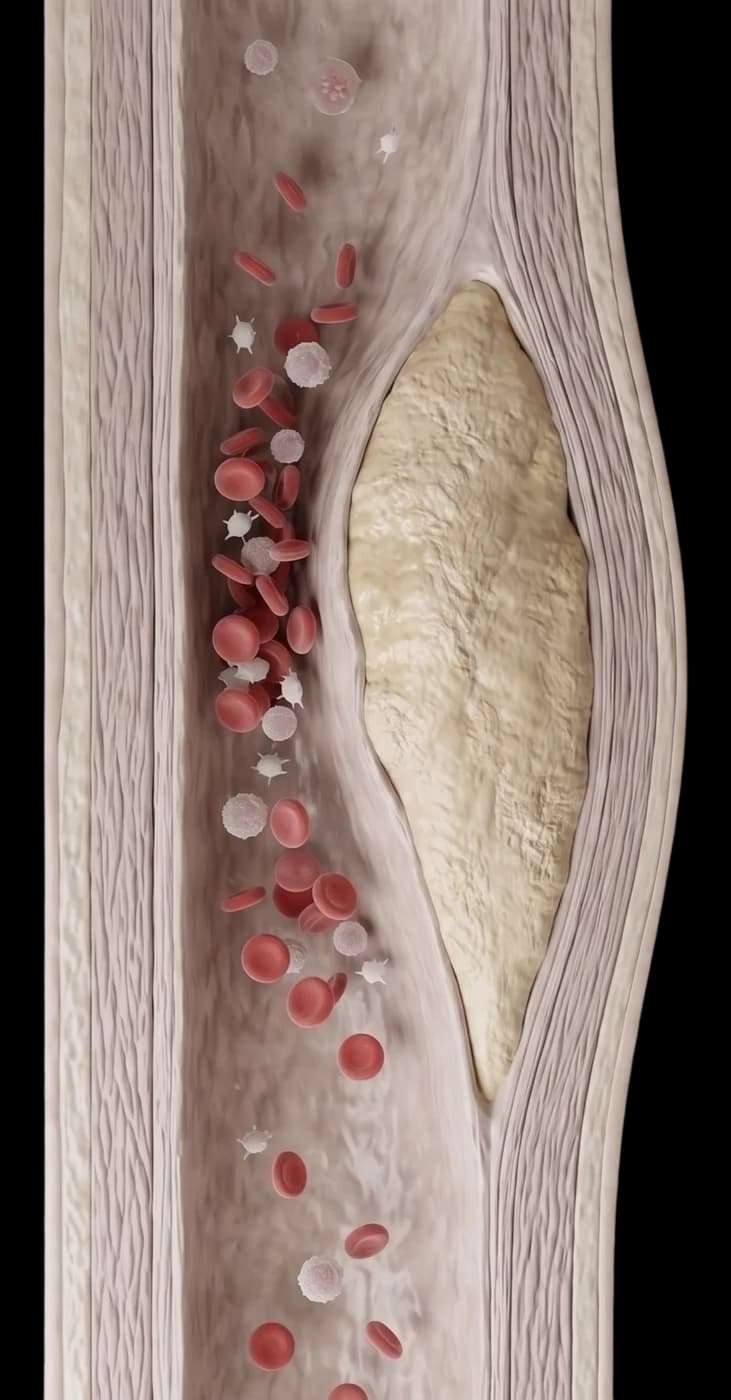
When an artery in the leg narrows, the muscle beyond it stops getting the blood it needs — which is why walking brings on cramping pain, and why wounds stop healing. Angioplasty uses a small balloon to reopen the narrowed segment; a stent holds it open where the balloon alone is not enough. Both are done through a puncture, without an incision.
- Through a puncture, no incision
- Local anesthetic with sedation
- One to two hours
- Same-day or next-morning discharge
How it works
Reopen the artery, restore the blood flow.
- 01Map the blockageUltrasound or CT angiography first, then live imaging during the procedure, to establish exactly where the artery has narrowed and how far the disease extends.
- 02Open itA balloon catheter is guided to the narrowed segment and inflated, pressing the blockage outwards and restoring the channel. Some balloons carry a medication that helps keep the vessel open afterwards.
- 03Hold it open, if neededWhere the vessel does not stay open on its own, a small stent is placed to scaffold it. Not everyone needs one — the decision is made during the procedure, based on how the artery behaves.
What to expect
From arriving to going home.
before
A non-invasive scan maps the disease, and you will be asked in detail about how far you can walk and what stops you. Exercise therapy and medication come first in the guidelines for leg pain from walking, and we will be straight with you about where you sit on that pathway.
during
Light sedation and local anesthetic at the access point, which is smaller than a pencil tip. Most cases take one to two hours. You are awake and able to talk with the team.
after
Same-day or next-morning discharge is standard. Walking distance often improves quickly once flow is restored. Ongoing medication and an exercise programme are part of keeping the result, not an optional extra.
What the evidence says
Every number here says where it came from.
And who it applies to. If a figure needs a caveat to be honest, the caveat is printed next to it rather than left off.
Exercise comes first
supervised exercise therapy carries the strongest recommendation for leg pain from walking
We are telling you this on the page about the procedure. Revascularization is recommended after an inadequate response to exercise and medical therapy — not instead of it.
2024 ACC/AHA multisociety guideline on lower extremity peripheral artery disease
82%
of treated vessels still open at one year with a drug-coated balloon, against 52% with a plain balloon
Thigh arteries, in patients with claudication or rest pain. Manufacturer-sponsored. Different vessels and more advanced disease behave differently.
IN.PACT SFA randomised trial, Journal of the American College of Cardiology, 2015
90–97%
limb salvage at one year in critical limb ischemia
A range from observational series rather than a single trial figure, and it applies to limb-threatening disease — not to leg pain when walking.
Published single-centre and multi-centre series
What it’s used for
Where this applies.
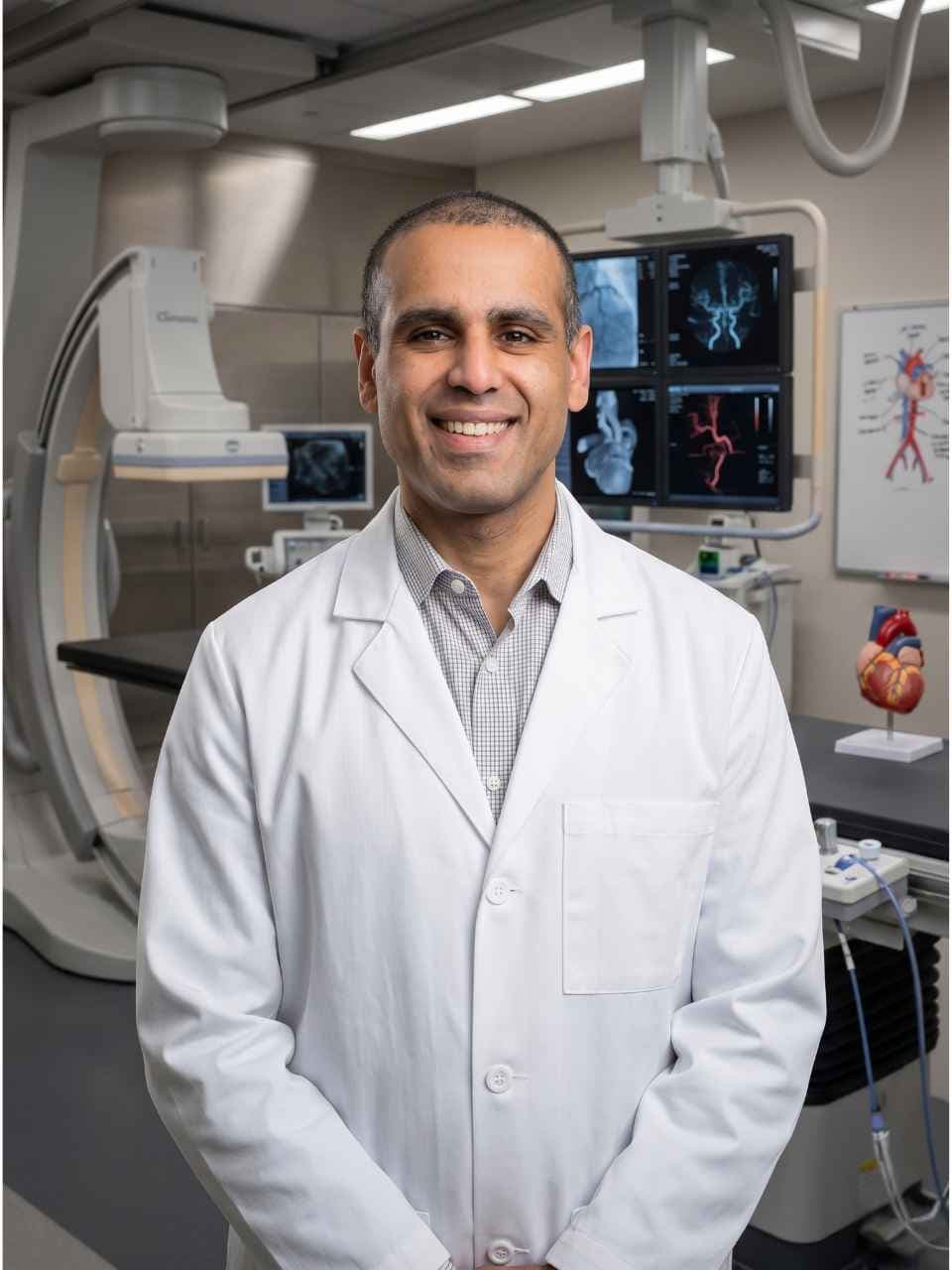
Who performs it
Common questions
What people ask about Angioplasty & Stenting.
For cramping leg pain brought on by walking, yes — and we will say so even though this is our procedure page. The 2024 ACC/AHA guideline gives supervised exercise therapy its strongest recommendation, and specifically advises against revascularization when medical therapy and exercise are working adequately. Where those have been tried and have not given you enough, that is when this conversation becomes the right one.
Bypass routes blood around the blockage using a graft, through an open operation under general anesthesia. Angioplasty works from inside the vessel through a puncture, with no incision and usually same-day discharge. For limb-threatening disease, a major trial found bypass with a good vein performed better than an endovascular approach in suitable candidates, so bypass is not simply the outdated option — which one fits depends on your anatomy and your overall health.
Possibly, and it is worth finding out quickly. A wound that will not heal often means not enough blood is reaching the tissue to do the healing. Restoring flow is what gives it a chance. This is the situation where we would want to see you sooner rather than later.
It can. That is why drug-coated balloons and stents exist, and why medication and exercise after the procedure matter as much as the procedure itself. Your specialist will set out what the follow-up looks like and what keeps the result.
The access point is numbed and you are sedated. Most people feel pressure during balloon inflation rather than pain. There is no incision to recover from afterwards.
The classic sign is cramping in the calf, thigh or buttock that comes on with walking and eases with rest. Other signs are coldness or colour change in one foot, sores that will not heal, and pain in the foot at night. It is diagnosed with a simple non-invasive test, not a guess.
Find out whether this fits.
A consultation is a conversation with a specialist, imaging in hand. Phoenix and Peoria.