
Neuromodulation
Spinal Cord Stimulation
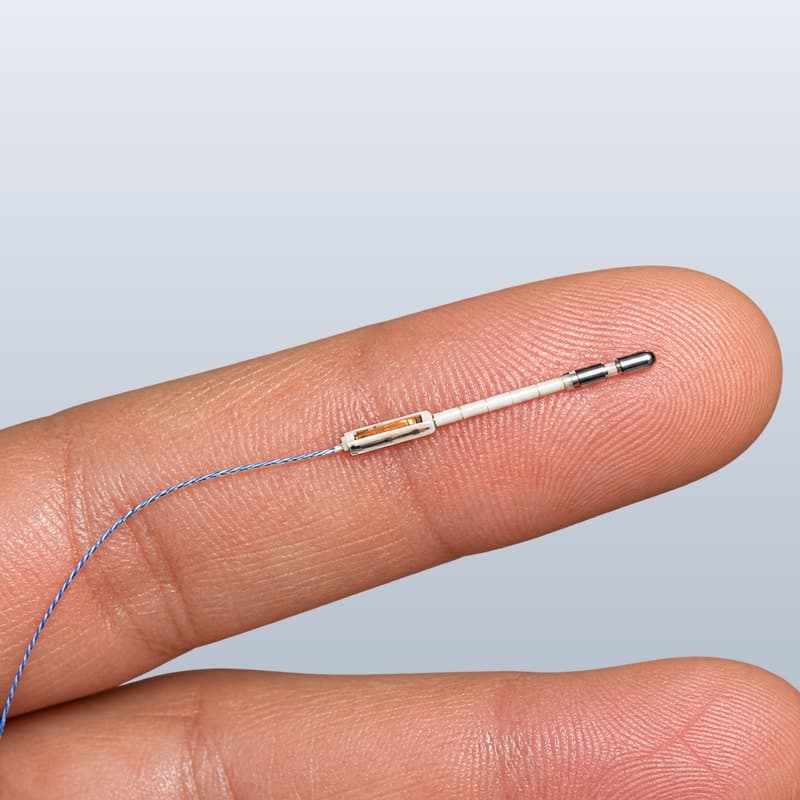
Spinal cord stimulation places thin leads in the space beside the spinal cord, where they deliver pulses that alter pain signals travelling up to the brain. It treats pain that is widespread rather than confined to a single nerve — both feet, a whole leg, the lower back. Like nerve stimulation, you trial it before anything is made permanent.
- Outpatient placement
- Trial period before any permanent system
- Adjustable, and reversible
- No ongoing medication
How it works
Change the signal before it reaches your brain.
- 01Map the painA specialist establishes the pattern and distribution of your pain, because SCS suits pain that covers an area rather than one nerve — burning in both feet, pain radiating down a leg, persistent back pain after surgery.
- 02Place the trial leadsThin leads are guided into the epidural space under imaging with local anesthetic. They connect to an external generator you wear, so nothing is implanted yet.
- 03Live with it, then chooseYou spend several days with the trial in normal life. Only if it makes a real difference does anyone discuss a permanent system — and even that can be removed later.
What to expect
From arriving to going home.
before
A thorough evaluation of where your pain is, what has already been tried, and whether the distribution fits what SCS does well. Insurance approval for neurostimulation usually requires documentation, and we handle that before scheduling.
during
Lead placement is done under local anesthetic with imaging guidance. You are awake so the team can confirm the stimulation is reaching the right area while the leads are being positioned.
after
You go home with the trial system and continue your normal routine. Your specialist reviews what actually changed before any decision about a permanent implant.
What the evidence says
Every number here says where it came from.
And who it applies to. If a figure needs a caveat to be honest, the caveat is printed next to it rather than left off.
85%
reached at least 50% pain relief, against 5% on medication alone
These patients had severe pain that had already failed medical management. This is the strongest evidence behind anything we offer.
Petersen and colleagues, JAMA Neurology, 2021 — randomised trial, 216 patients with painful diabetic neuropathy
76%
average reduction in pain at six months, against almost no change on medication alone
Industry-funded, and the medication-only group was not blinded. The effect size is large enough that this is still the reference trial in the field.
Same trial (Petersen, JAMA Neurology, 2021)
Holds at 2 years
roughly 8 to 9 in 10 implanted patients were still responding at 24 months
Follow-up data counts the people who kept the device and returned for review, which flatters the number somewhat.
Follow-up reporting from the same diabetic neuropathy cohort, 2022–2024
Removable
devices are explanted in roughly 12% of patients by 3 years and 38% by 10
We publish this because you should know it. Reasons range from loss of benefit to no longer needing it — and it is the honest counterweight to the response rates above.
Pooled analyses of spinal cord stimulation outcomes, 2024–2026
Against the alternative
What you are actually choosing between.
Gabapentinoids and long-term medication
SCS
For nerve pain, roughly 4 to 10 people need treating for one to get meaningful relief
You find out whether it works for you during the trial
Dizziness, weight gain, swelling and cognitive fog are common reasons people stop
No systemic drug effect
Taken daily, indefinitely, with the dose often climbing
Adjustable, and removable if it stops earning its place
Escalation often ends at opioids
Built precisely to avoid that path
What it’s used for
Where this applies.
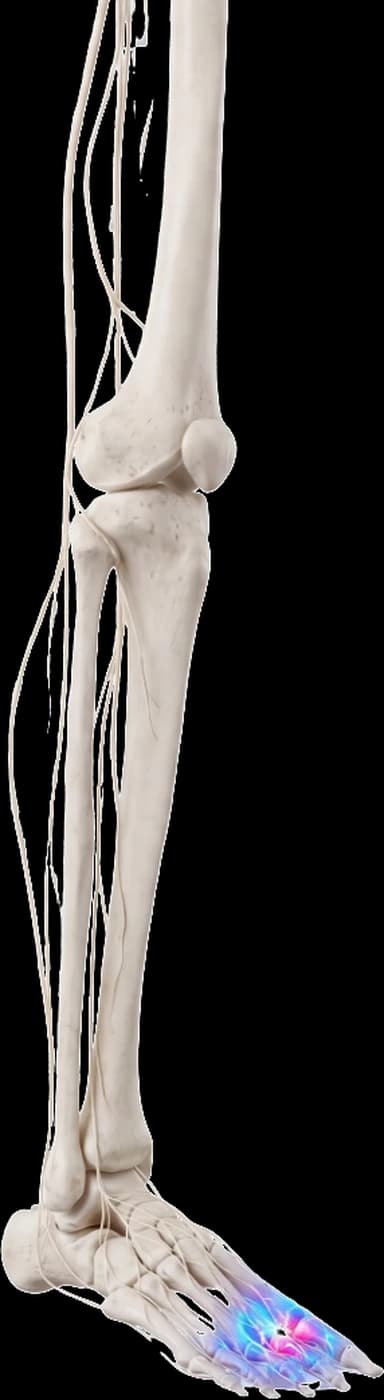
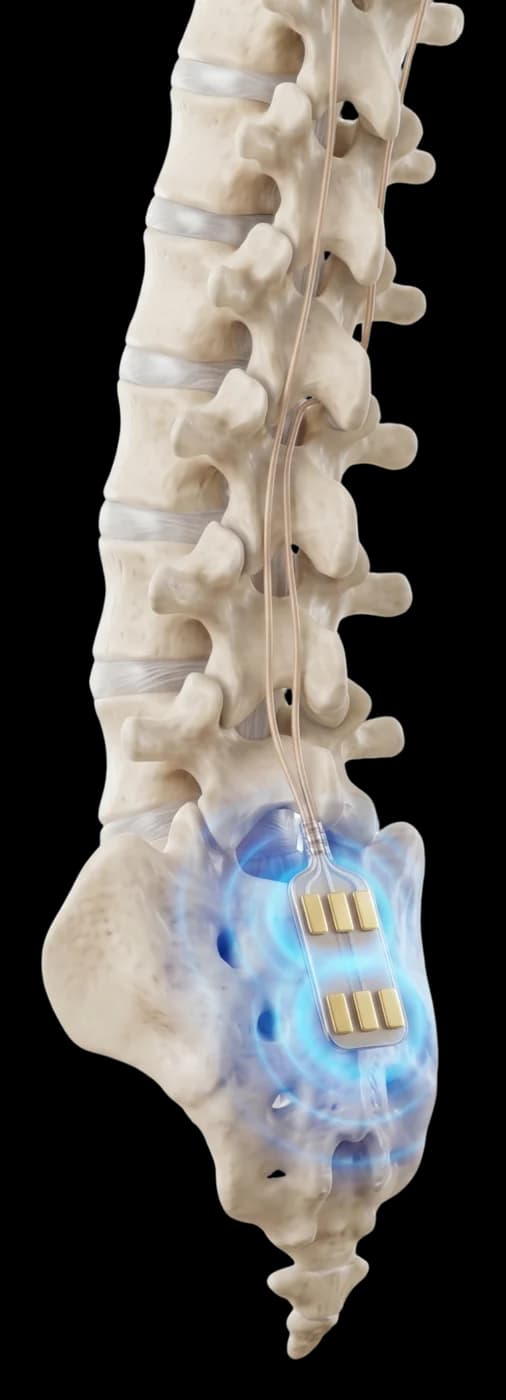
SCS is considered when pain is widespread or has not responded to more targeted approaches. It is not usually the first thing tried, and it is not right for everyone — the evaluation exists to work that out honestly.
All treatmentsWho performs it
Common questions
What people ask about SCS.
This is the indication with the best evidence behind it. In a randomised trial of 216 people with painful diabetic neuropathy that had not responded to medication, about 85% of those treated with spinal cord stimulation reached at least half their pain relieved at six months, compared with about 5% of those on medication alone. Average pain dropped by roughly three quarters. Those are unusually strong numbers for chronic pain, and they come from a peer-reviewed trial in JAMA Neurology rather than from a brochure.
SCS is used for persistent back and leg pain, particularly where spine surgery has already happened and the pain has not resolved. The evidence there is more mixed than for diabetic neuropathy — much of it compares one stimulation technology against another rather than against no treatment at all. We would rather set that expectation honestly than lead with the diabetic neuropathy numbers and let you assume they transfer.
No, and that is the point of the trial. Leads go in, the generator stays outside your body, and you live with it for several days. Only if it makes a genuine difference does anyone discuss a permanent system. If it does not, the leads come out.
Yes. Devices are removed for various reasons — some people no longer need them, some lose benefit over time. Across pooled studies, around 12% are removed within three years and about 38% within ten. We would rather you know that figure now than discover it later.
That depends on the system. Some produce a light tingling in the painful area; newer high-frequency systems are designed not to be felt at all. Your specialist will discuss which suits you.
The main ones are infection, a lead that moves and needs repositioning, and the device not delivering enough benefit to keep. Infection requiring removal occurred in about 2% of the diabetic neuropathy trial. The trial period exists precisely so that the last risk is discovered before anything permanent happens.
Spinal cord stimulation is widely covered when criteria are met, and those criteria usually require documented failure of other treatments. We handle that paperwork and tell you where you stand before anything is scheduled.
Find out whether this fits.
A consultation is a conversation with a specialist, imaging in hand. Phoenix and Peoria.