
Embolization
Genicular Artery Embolization
Genicular artery embolization reduces the blood supply feeding inflamed tissue inside the knee. It is done through a puncture a few millimetres wide, under local anesthetic with light sedation, and you go home the same day. Nothing is cut, nothing is removed, and nothing is left behind that has to come out.
- Outpatient — not a hospital wing
- Local anesthetic with sedation
- About 1 to 2 hours
- Home the same day
How it works
Treat the inflammation driving knee pain — without opening the knee.
- 01AccessA thin catheter enters through a puncture at the wrist or the top of the leg — about the width of a pencil tip. There is no incision and no general anesthesia.
- 02MapLive imaging identifies the small genicular arteries feeding the inflamed lining of the joint. These are the vessels that grew in response to years of inflammation.
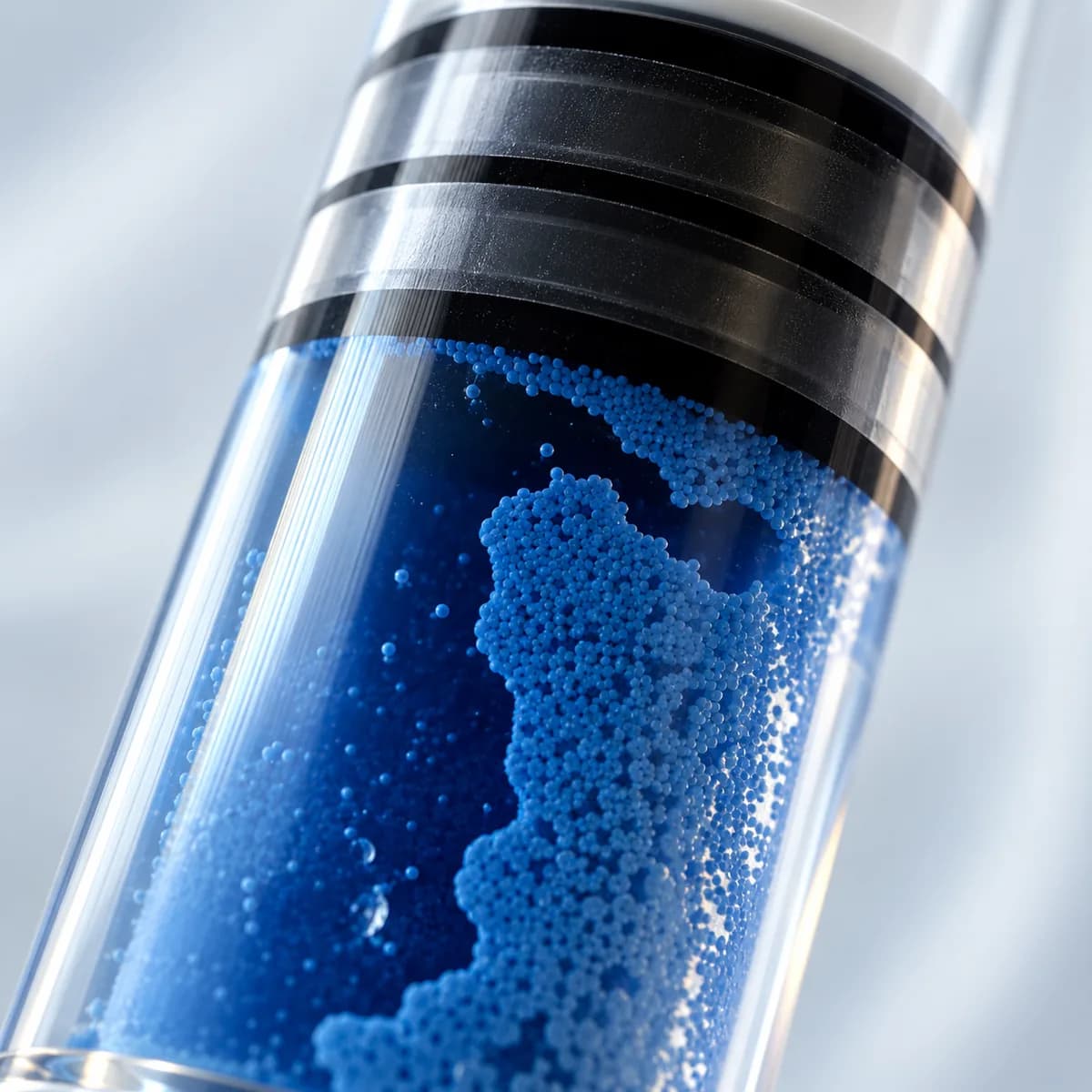
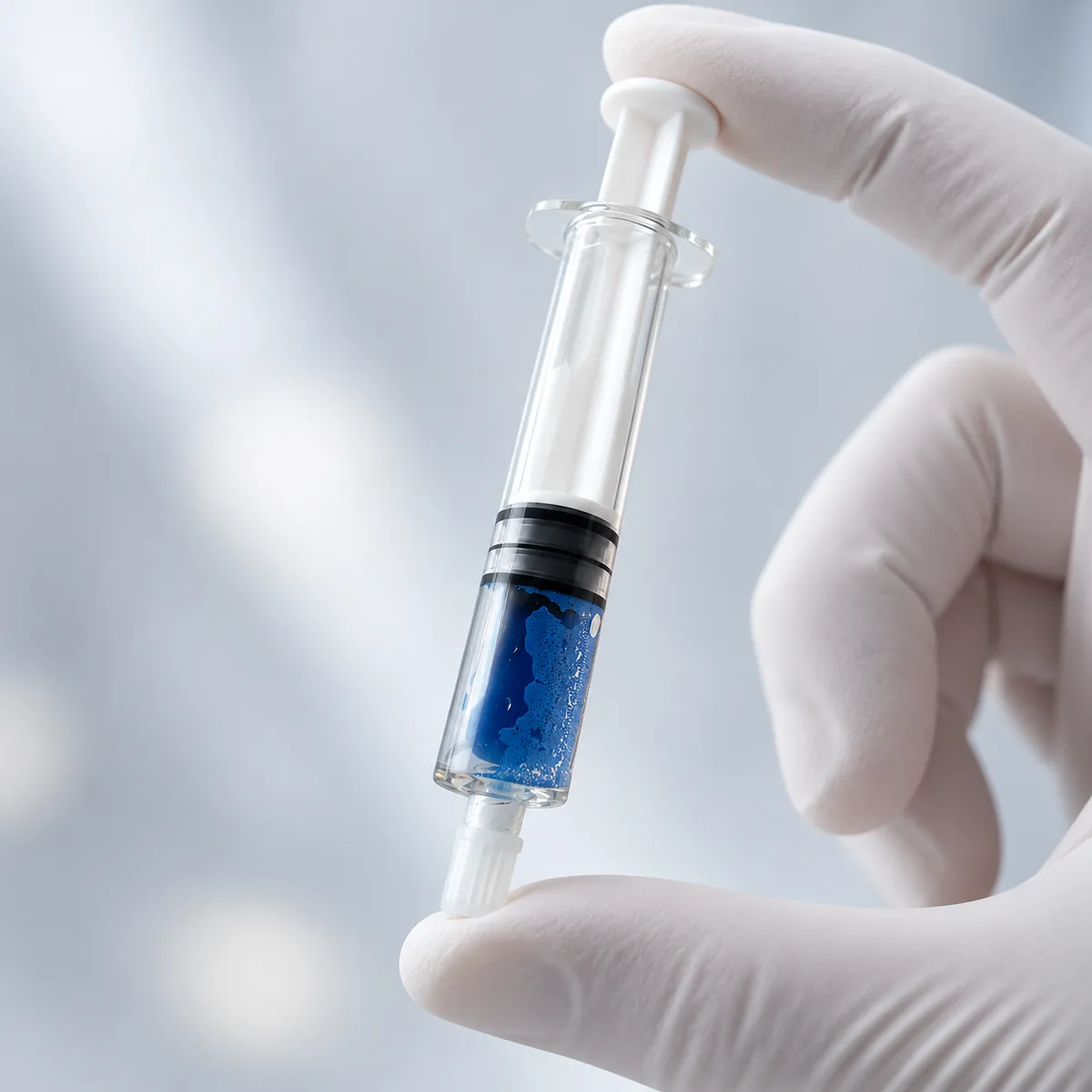
- 03EmbolizeMicrospheres roughly the width of a human hair are released into those vessels, reducing the blood flow that sustains the inflammation. The catheter comes out; a bandage goes on.
What to expect
From arriving to going home.
before
Imaging and an exam come first, then a conversation about whether this is a sensible fit for your knee. Your insurance is verified before anything is scheduled, so you know where you stand before you commit.
during
You are sedated but awake, and the team talks you through each step as it happens. Most people describe pressure rather than pain. There is no breathing tube and no hospital admission.
after
A short recovery period in the center, then home the same day. Most people are back to light activity within a day or two. The full effect develops gradually over the following one to three months as the inflammation settles.
What the evidence says
Every number here says where it came from.
And who it applies to. If a figure needs a caveat to be honest, the caveat is printed next to it rather than left off.
82–87%
technical success — the target vessels are reached and treated
Technical success describes the procedure being completed as intended. It is not the same as pain relief.
GENESIS prospective cohort, Cardiovascular and Interventional Radiology, 2024; consistent with pooled single-arm series
No serious adverse events
across the published sham-controlled trials
Minor effects are common and expected — temporary skin discoloration over the knee occurred in roughly 1 in 10 patients in the GENESIS cohort.
Bagla, JVIR 2022; Landers, Bone & Joint Open 2023; Van Zadelhoff, BMJ Open 2024
2 years
the longest published follow-up, in a US trial
Roughly half of everyone treated still showed benefit at the two-year mark. Of those who were doing well at one year, most had held onto it.
Cusumano and Padia, Journal of Vascular and Interventional Radiology, 2024 (n=40)
Replacement stays available
embolization does not close the door on surgery later
A small single-centre series, but the only direct evidence on this question, and it points one way.
GENESIS cohort — 9 of 46 patients went on to knee replacement at about 18 months, with no technical difficulty reported at surgery
Against the alternative
What you are actually choosing between.
Total knee replacement
GAE
Roughly 1 in 5 patients still reports an unfavourable pain outcome a year or more afterwards
If it does not help you, you have not lost anything — replacement is still there
General anesthesia, a hospital stay, and post-operative opioids
Local anesthetic with sedation, home the same day, no opioid protocol
Months of rehabilitation before you know where you have landed
Light activity within a day or two
A permanent implant with a finite lifespan, and revision surgery if it fails
Nothing is implanted and nothing has to come out
Infection of the joint is uncommon but serious when it happens
No open wound and no prosthetic surface for an infection to settle on
What it’s used for
Where this applies.
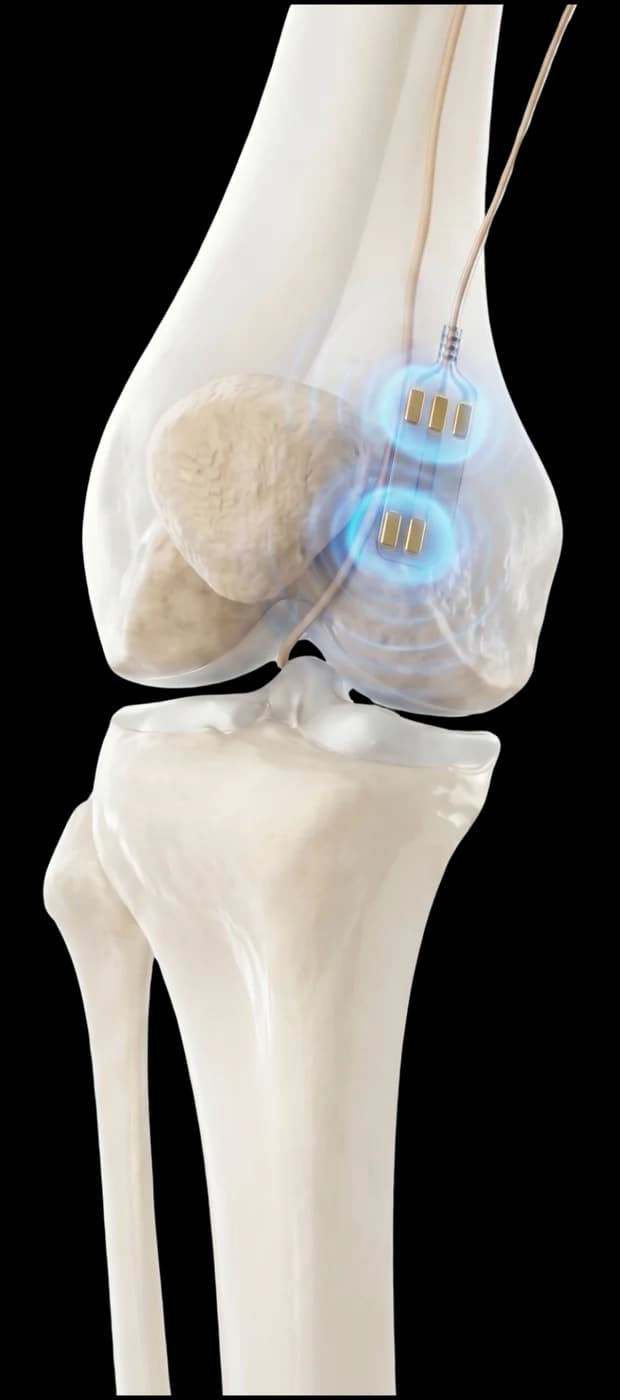
Embolization is used elsewhere in the body too — the shoulder, wrist, heel and uterine fibroids all work on the same principle. Those live on the embolization family page.
All treatmentsWho performs it

Common questions
What people ask about GAE.
No — and this is the most important thing to understand about it. Embolization does not remove tissue, alter the joint surfaces, or place hardware, so it does not take a replacement off the table. In the GENESIS cohort, nine patients went on to have a knee replacement at around eighteen months and the surgeons reported no technical difficulty. Trying this first costs you an option you can still exercise later.
A replacement removes the damaged joint surfaces and fits an implant. It is major surgery under general anesthesia with a hospital stay, a course of opioids, and months of rehabilitation. Embolization does not touch the joint at all — it works on the blood vessels feeding the inflamed lining around it, through a puncture a few millimetres wide, and you go home the same day.
Honestly: it is promising and it is still maturing. Genicular artery embolization has been studied in peer-reviewed journals including the Journal of Vascular and Interventional Radiology, and the Society of Interventional Radiology recognises it as an option for symptomatic knee osteoarthritis. Three sham-controlled trials have been published, with mixed results — one clearly positive, one positive only in the patients whose target vessels were fully treated, and one that did not separate from sham at four months. Those trials are small, and the field has not yet had a large, well-funded one. What is consistent across all of them is safety: no serious adverse events. We would rather tell you that than quote you a number we cannot stand behind.
Most people describe pressure rather than pain. You are sedated but awake and able to talk to the team throughout. The access site is numbed with local anesthetic, and there is no incision to recover from afterwards.
This is not an injection — it does not switch off overnight. The inflammation settles gradually, and most people notice meaningful change over the first one to three months. Some feel it sooner. Your specialist will set expectations for your particular knee before you decide.
The people who tend to do best have knee pain driven by inflammation rather than purely mechanical damage, have tried conservative measures without lasting relief, and either are not ready for a replacement or cannot safely have one. That is a judgment made with imaging and an exam, not from a web page. A consultation is the fastest way to find out.
Coverage varies by plan. We verify your benefits before anything is scheduled and tell you what we find, including when the answer is that it will not be covered. You will not learn about a cost after the fact.
Then you are where you started, with every option you had before still open — injections, nerve-based approaches like peripheral nerve stimulation, or replacement when you are ready for it. That is the practical argument for trying the least invasive thing first.
Find out whether this fits.
A consultation is a conversation with a specialist, imaging in hand. Phoenix and Peoria.