
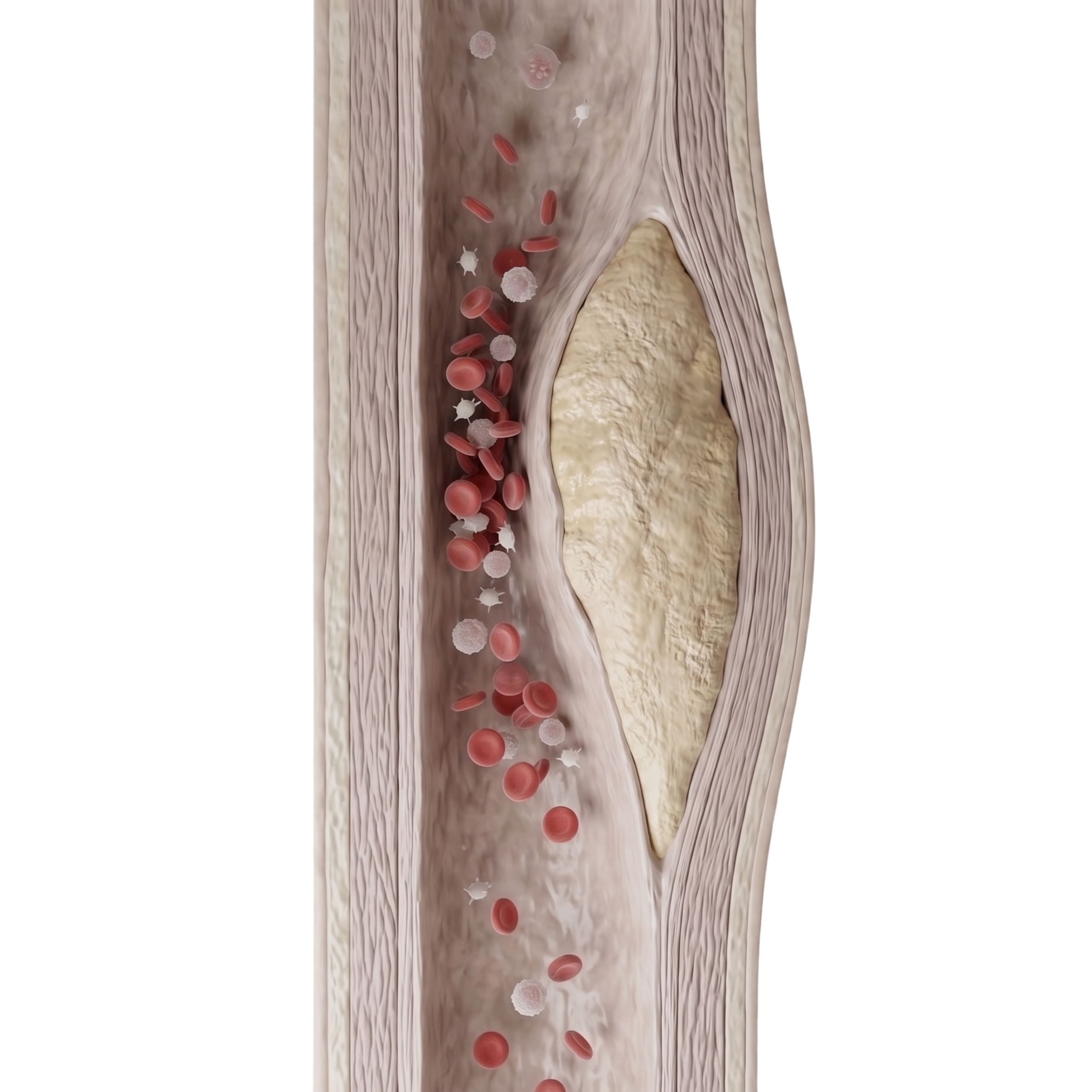
Peripheral Arterial Disease
Restore blood flow. Relieve limb pain. No open surgery.
- Peripheral arterial disease (PAD)
- Claudication (leg pain with walking)
- Critical limb ischemia
- Non-healing wounds or ulcers
- Rest pain in feet or legs
- Arterial blockages in the iliac, femoral, or tibial arteries
Peripheral arterial disease occurs when plaque buildup narrows the arteries supplying blood to your legs, feet, or arms — causing pain, cramping, and in severe cases, non-healing wounds or limb-threatening ischemia. Traditional treatment often meant bypass surgery with weeks of recovery.
Our interventional specialists treat PAD endovascularly: through a tiny access point in the wrist or groin, we open blocked arteries with balloons and stents, restoring circulation the same day.
Percutaneous Transluminal Angioplasty (PTA)
A tiny balloon catheter is guided to the narrowed artery and inflated to open the blockage, restoring blood flow without any incision.
Endovascular Stenting
When angioplasty alone isn't sufficient, a small metal stent is placed inside the artery to hold it open long-term and prevent re-narrowing.
Before
A non-invasive vascular ultrasound or CT angiogram maps the location and severity of your arterial disease. We review findings together and build a personalized treatment plan.
During
Procedures are performed under light sedation through an access point smaller than a pencil tip. Most cases take one to two hours with minimal discomfort.
After
Same-day or next-morning discharge is standard. Most patients notice improved circulation and reduced pain within days. A structured follow-up plan monitors long-term vessel health.
Peripheral Arterial Disease — what most patients ask.
In most cases, yes. The 2016 ACC/AHA guidelines on peripheral arterial disease and TASC II recommendations support an endovascular-first approach for many lesions — meaning angioplasty, stenting, or atherectomy can often restore blood flow without open surgery. Bypass is reserved for cases where endovascular treatment is not anatomically feasible or has failed.
Find out if you're a candidate.
Our free assessment takes less than 2 minutes and helps us match you with the right specialist.